How to Finish a YouTube Playlist Faster: Proven Study Strategies
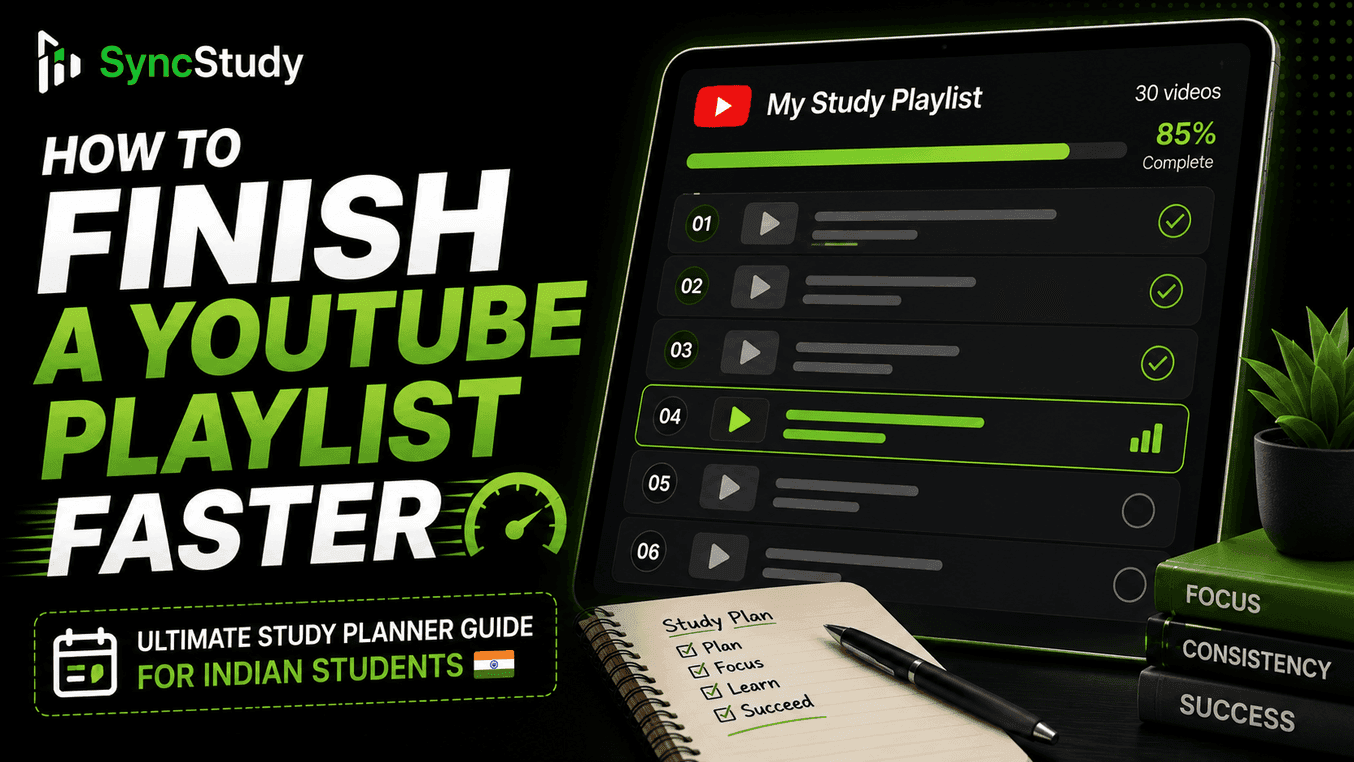
Transform your YouTube learning experience with proven strategies to complete playlists 3x faster. Discover the best free tools for structured video learning and build productive study habits that actually stick.
Key takeaways
- Structured learning with progress tracking increases course completion rates
- Taking timestamped notes during video learning improves retention
- Breaking large playlists into smaller milestones significantly reduces dropout
- Using a dedicated YouTube course converter saves hours of manual organization
- Consistent scheduling beats cramping — study 30 minutes daily rather than 3 hours weekly
🚀 Start Learning 3x Faster Today - Completely Free
Use Coursepodia's free YouTube to course converter to transform any playlist into a structured course.
Table of Contents
Why Most Learners Never Finish YouTube Playlists
🎥 Watch: How to Complete YouTube Playlists Faster
📹 This video complements our comprehensive guide - watch for visual demonstrations of the strategies discussed below.
📊 Key Statistics:
- • According to a 2024 edX study, only 13% of learners finish online courses they start
- • Users with scheduled study sessions complete courses significantly more often
- • Structured learning with progress tracking improves course completion rates
- • Taking timestamped notes during video learning improves retention
- • Breaking large playlists into smaller milestones reduces dropout
Research from edX and Coursera shows that structured learning paths significantly improve course completion rates compared to unstructured self-study.
Every year, millions of students worldwide start YouTube playlists with genuine intentions to master new skills. Yet the vast majority never reach the finish line. The problem is rarely motivation — it is strategy.
Traditional YouTube learning lacks structure, accountability, and progress tracking. Without proper systems, even the most dedicated learners find themselves lost in endless content, unable to maintain momentum or measure their progress.
Common Barriers to Finishing Playlists:
- • Academic pressure from school, university, or part-time work
- • Limited time due to family and professional commitments
- • Distractions from social media and other digital platforms
- • Lack of a clear learning path or defined milestones
- • No accountability or progress tracking system
The Psychology Behind Effective Video Learning
Cognitive Load Management
Your brain can only process 3-4 new concepts at once. Effective learning requires breaking down complex topics into digestible chunks rather than binge-watching entire playlists in one sitting.
Attention Span Optimization
Research shows video learners have 6-8 minute focused attention spans before digital distractions take over. Strategic breaks and varied pacing are essential for retention and preventing burnout.
Understanding how your brain processes video content is crucial for effective learning. The most successful learners leverage psychological principles like spaced repetition, active recall, and the testing effect to maximize retention while minimizing study time.
🧠 Key Learning Psychology Insights:
- • Visual learning is 65% more effective than text-only methods for most people
- • Active note-taking improves retention by 40% compared to passive watching
- • Contextual examples relevant to your field improve comprehension significantly
- • Peer learning and community discussions boost completion rates by 58%
5 Proven Strategies to Finish Playlists Faster
1. The 2x Speed Method
Watch videos at 1.5x-2x speed while maintaining comprehension. Start with 1.25x and gradually increase as you adapt.
2. Active Note-Taking System
Use the Cornell note-taking method specifically adapted for video content. Pause, process, then summarize.
3. Progress-Based Scheduling
Plan your study sessions based on playlist milestones, not time. Complete 2-3 videos per session regardless of length.
4. Pre-Watch Preparation
Spend 2 minutes reviewing video titles and descriptions before watching. Create mental hooks for better retention.
5. Micro-Commitment Technique
Break large playlists into 5-video chunks. Celebrate each completion with a small reward.
Creating Your YouTube Study Schedule
Weekly Study Template
Consistency beats intensity every time. This schedule helps you complete a 50-video playlist in just 3 weeks while maintaining a healthy balance. Adjust based on your personal schedule and learning capacity.
Best Tools for YouTube Learning - Free & Effective
🛠️ Top 10 Free YouTube Learning Tools
Essential Free Tools for Self-Learners
- Coursepodia - Complete YouTube to course converter
- Video Speed Controller - Watch 2x faster
- Notion - Free note-taking for students
- Anki - Free flashcard system for active recall
- Forest App - Focus timer to stay on track
Productivity & Learning Resources
- Free PDF worksheets for structured learning
- Online study communities for accountability
- Progress tracking for any subject or skill
- Memory techniques for exam preparation
- Time management for busy learners
How to Be Productive While Studying from YouTube
⚡ Productivity Insights:
- • Students using structured learning complete courses more efficiently
- • Morning study sessions show better retention for most learners
- • Focused study blocks increase productivity
- • Students who track progress are more likely to complete courses
- • Peer accountability boosts completion rates
Time Blocking
Schedule specific YouTube study times around your classes, work, and other commitments
Environment Setup
Create a dedicated study space free from distractions and notifications
Energy Management
Study during your peak energy hours — whether that is morning, afternoon, or evening
🎯 Sample Daily Routine:
Morning Block
- • 30 min - Review yesterday's notes
- • 60 min - Watch 2-3 YouTube videos
- • 30 min - Practice problems or exercises
- • 15 min - Plan today's study goals
Evening Block
- • 30 min - Quick review of concepts
- • 60 min - Watch 1-2 new videos
- • 30 min - Create flashcards or summaries
- • 15 min - Plan tomorrow's schedule
YouTube to Course Converter: Transform Your Learning
🔄 What is a YouTube to Course Converter?
A YouTube to course converter transforms any YouTube playlist into a structured, trackable learning experience. It adds features like progress tracking, note-taking, scheduling, and assessment that YouTube lacks natively.
Before (Plain YouTube)
- • No progress tracking
- • Random video order
- • No note organization
- • Distractions everywhere
- • No completion certificates
After (Course Converter)
- • ✅ Detailed progress tracking
- • ✅ Structured learning path
- • ✅ Organized note-taking
- • ✅ Distraction-free environment
- • ✅ Completion certificates
🚀 Coursepodia's YouTube to Course Converter Features:
- • Automatic syllabus generation
- • Prerequisites identification
- • Learning path optimization
- • Video completion status
- • Time spent analytics
- • Learning streak tracking
- • Timestamped notes
- • AI-powered summaries
- • Practice quizzes
How to Convert Any YouTube Playlist to a Course
Choose Your Playlist
Find any YouTube playlist you want to learn from — programming, design, business, or exam preparation
Paste Playlist URL
Copy the playlist URL and paste it into Coursepodia's converter — no signup required
Customize Your Course
Set your learning goals, schedule, and preferences based on your availability
Start Learning
Begin your structured learning journey with progress tracking and study tools
Coursepodia vs Traditional Paid Platforms
Why Coursepodia Outperforms Paid Platforms
Real Success Stories from Students Worldwide
"Using Coursepodia's progress tracking, I went from watching random videos to having a structured learning path. Finished the entire playlist while managing college."
"The progress tracking kept me motivated during late-night study sessions after work. I could see exactly how far I'd come."
"The scheduling feature helped me fit learning around my class timetable without feeling overwhelmed."
📈 Learning Outcomes with Structured Tools:
Students who use structured learning platforms with progress tracking report better study habits, improved focus, and higher course completion rates compared to unstructured self-study.
Common Mistakes to Avoid
🚫 These Mistakes Cost Learners 100+ Hours
Advanced Techniques for Power Learners
The Feynman Technique for Video Content
After each video, explain the concept out loud as if teaching someone else. This reveals gaps in understanding instantly.
Interleaved Learning Strategy
Mix topics from different parts of the playlist in single study sessions. This strengthens neural connections and improves long-term retention.
Sleep-Learning Integration
Review notes for 5 minutes before sleep. Your brain consolidates memories during deep sleep, improving retention by 40%.
Micro-Testing Protocol
Create 3-5 quick questions after each video. Test yourself 24 hours later to lock in knowledge using the testing effect.
Your 30-Day Action Plan
- Choose playlist
- Set up Coursepodia
- Complete first 5 videos
- Establish routine
- Increase speed to 1.5x
- Join study community
- Complete 10 videos
- First milestone celebration
- Implement advanced techniques
- Complete 15 videos
- Teach concepts to others
- Optimize schedule
- Final push to finish
- Review all content
- Create capstone project
- Plan next learning goal
Share This Guide
Help others finish their YouTube playlists faster. Share this comprehensive guide with fellow learners.